
Blue Collar & White Collar
Letter #126

In 1951, the year that I was born, Oxford University Press published a sociological study about American workers. It was entitled White Collar: The American Middle Classes, written by Charles Wright Mills. This study marked the gradual turn in American capitalism from manufacturing and productivity to marketing and salesmanship.
When growing up I had what I thought was a clear understanding of the difference between “blue collar workers” and “white collar workers”, a distinction that is now almost a century old.[1] Blue collar workers were those who got their hands dirty when working – mechanics, butchers, foundry workers, truck drivers and many similar jobs. White collar workers described those who wore a white shirt, usually with a suit and tie. These were the people, often with an education beyond high school, who worked in offices behind a desk and on a phone, or in neighborhoods as salesmen.

My father became a white-collar worker, while his five brothers were blue collar workers. He was the only one in his family who pursued a college education, while three of his brothers learned trades, progressing from apprentice to journeyman to master. Both of these approaches allowed for stable incomes. When a child, it seemed to me that the difference boiled down to categories of “workers” and “bosses”. I now know that my understanding was an over-simplification.
After World War II, my father worked as a high school math teacher. Upon returning to the civilian workforce after the Korean War, he was hired as assistant manager and then manager of a manufacturing plant producing heavy equipment. While a part of Management, his success – as he explained to me – was dependent upon having a good understanding of the men (and the nature of their jobs) who worked for him. My uncles, once master tradesmen, soon developed businesses of their own and became employers.
As I grew into adulthood, I watched the gradual shift of jobs in our country from those of industrial capitalism to those of financial capitalism, as the new era focused less on production and more on business. It seemed that this was when professionalism or technical skills began to be replaced by personality; when the “sales pitch” became more important than the quality of the product; and when white-collar workers became an interchangeable part of corporate machines. To put it more bluntly, this was when cleverness seemed to eclipse existing work-related virtues, like honesty, reliability, integrity and dedication, as the path to success.[2]
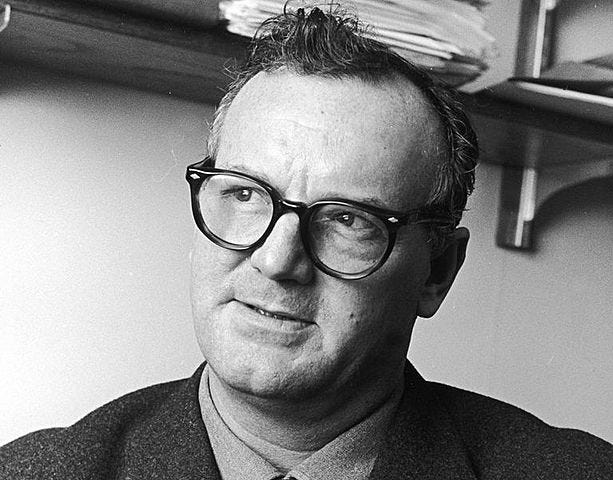
This was the process that C. Wright Mills had already begun to see, a transition – according to him – leaving the middle class increasingly fragmented, isolated, and passive. Power began shifting towards corporations, while employee unions gradually weakened.
This process accelerated in 2010 after the Supreme Court, with a narrow majority, ruled in Citizens United v. Federal Election Commission that corporations had the same First Amendment right to free speech as any individual citizen, and they also had an unlimited right to spend their money to support any campaign or to influence voters in any manner. The only restriction was against outright bribery, or as the Court’s opinion called it “quid pro quo corruption.”[3]
Totally apart from Mills’s academic treatise, it did not take long for people to realize that a world of business and finance often left people searching for some purpose in life beyond becoming wealthy, or more often just surviving. In 1955 Sloan Wilson published a wildly popular novel entitled The Man in the Gray Flannel Suit. The story revolved around a married World War II veteran with PTSD, who is offered a job in public relations, specifically (and ironically) to sell the idea of national mental health services to physicians. At a deeper level, however, this story was about the conflict between personal integrity and professional success, as well as between the value of the individual and the profitability of the company. Within a year the book was made into a popular movie starring Gregory Peck and Jennifer Jones.[4]
As the pages of history turned from the 20th century to the 21st century, I sensed that the tension between worker and employer had become more complex and the stakes more extreme. The distinction between blue collar and white collar workers had become even more blurred, especially after the advent of tech CEOs wearing T-shirts!
To be successful today, blue-collar workers have to be better educated, mastering technical knowledge needed to install or repair equipment and products that are highly computerized. Currently, thousands of critical blue collar jobs remain unfilled because the requisite education and training are not easily available.[5] Also, white collar workers – particularly those in information technology and software development – are being dismissed by the tens of thousands from companies who anticipate profit by replacing them with AI programs.[6] They too may need to be retrained.
In looking beyond changes in patterns of U.S. employment, changes in the structural and political nature of society in America also become evident. These, too, were first noted by C. Wright Mills, who was a pragmatist, always looking at reality with a goal of solving problems. Five years after he wrote White Collar: The American Middle Class, he wrote another book, entitled The Power Elite. In this book he argued that power in the United States is centralized in the leadership of three overlapping hierarchies – the corporate economy, the executive branch of government, and the U.S. military. He believed that public opinion is influenced, if not directed, by these elites through their control of the media. He concluded that the American people are subjects of mass manipulation more than they are active participants in our democracy. Mills believed that the shared backgrounds, worldviews and personal goals of leaders in these three hierarchies converge to exclude the interests and ignore the opinions of the relatively powerless American public.
C. Wright Mills was born in Waco, Texas, in 1916, and earned his early degrees at the University of Texas at Austin. He died abruptly at age 45, in 1962. His daughters, Kathryn and Pamela, compiled and edited a special collection of his miscellaneous writings in 2000.[7] In an essay, “The Powerless People: The Role of the Intellectual in Society” – written in 1945 and updated around 1960 – Mills wrote:
The more we understand what is happening in the world, the more frustrated we often become, for our knowledge leads to feelings of powerlessness. We feel that we are living in a world in which the citizen has become a mere spectator or a forced actor, and that our personal experience is politically useless and our political will a minor illusion.
Very often, the fear of total permanent war paralyzes the kind of morally oriented politics, which might engage our interests and our passions. We sense the cultural mediocrity around us – and in us – and we know that ours is a time when, within and between all the nations of the world, the levels of public sensibilities have sunk below sight; atrocity on a mass scale has become impersonal and official; moral indignation as a public fact has become extinct or made trivial.[8]
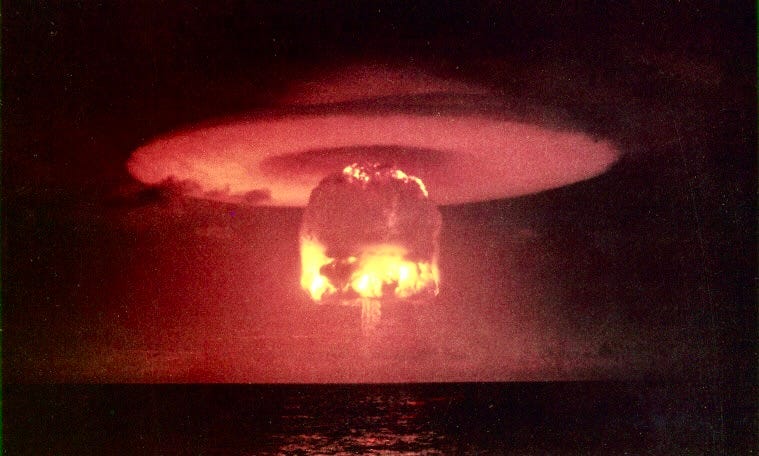
Mills gave considerable thought to the use and projection of America power abroad. He was concerned about the potential for a global catastrophe occurring as a result of changes in our society that are driven by an irrational reliance on military power to solve political disputes. In his 1958 book, The Causes of World War III, he called this “crackpot realism” – a foreign policy that masquerades as pragmatic but is both irrational and detached from reality. He feared that the leaders of the government, the military, and the economy would adopt an apocalyptic mindset that viewed global relations as a zero-sum game of dominance and submission.
It impresses me that – somehow and many decades ago – a thoughtful and careful observer of changes in the U.S. workforce, changes in our society, and changes in the power structure and governance structure in America could so clearly articulate many of the concerns that people express today. There are two lessons that I draw from this.
First is the importance of looking beyond the news of the day and observing the underlying changes in our values and our society. Do our present-day concerns reflect anything more than our daily challenges to survive or to prosper? Do we understand why and how our efforts to personally succeed distract from collective efforts to develop a healthy society?
Second is the importance of recognizing that there are gradual but cumulative, long-term changes that impact every dimension of our lives as well as those of our descendants. I was in my early 20’s when I first heard about the “iron triangle” of taxation, regulation and litigation that would dictate our public policy.[9] Can we discern where our individual and collective interests are best served? And are we content to be “mere spectators” of or “forced actors” in these changes?
As a grandfather, I marvel at the intensity and breadth of curiosity that you, my grandchildren, demonstrate as you grow. And yet I see how many of us adults – as we age – narrow our focus and restrain our curiosity, missing the cues and lessons that thoughtful observers such as Wright Mills captured. My advice to you is to remain attentive, observant, analytical, thoughtful and engaged in the world around you.
And I’d like you to think about the cost of complacency, as told in the parable of the frog who would immediately jump out if dropped into a pot of boiling water, but who would remain and die in tepid water that is slowly brought to a boil, because he is not aware of the gradual change intended to kill him.
Opa
[1] https://rethinkq.adp.com/history-white-collar-vs-blue-collar/
[2] See Malcolm Gladwell’s brief comments on how much harder work is today than in the 1950s:
And see this review of the 1950s office compared to that of today: http://bit.ly/4w8jBB1
[3] https://www.brennancenter.org/our-work/research-reports/citizens-united-explained
[4] https://en.wikipedia.org/wiki/The_Man_in_the_Gray_Flannel_Suit
[5] See: https://www.npr.org/2023/02/14/1155405249/high-paying-jobs-that-dont-need-a-college-degree-thousands-of-them-are-sitting-e and https://fortune.com/2025/12/20/gen-z-blue-collar-work-ford-economy/
[6] See: https://www.trueup.io/layoffs and https://hbr.org/2026/01/companies-are-laying-off-workers-because-of-ais-potential-not-its-performance
[7] Full-text contents viewable at: https://publishing.cdlib.org/ucpressebooks/public/book/c-wright-mills-letters-and-autobiographical-writings.html
[8] https://www.cwrightmills.org. At this site are links to articles by and videos about C. Wright Mills, including a dictation for his typist of his preface to 1958 book, The Causes of World War III.
For further insight into his encouragement of social action, see: https://infed.org/dir/welcome/c-wright-mills-power-craftsmanship-and-private-troubles-and-public-issues/
[9] https://sk.sagepub.com/ency/edvol/ethics/chpt/iron-triangles#_